
- Adnan, H. Q. M., & Ali, K. R. E. (2013). Tourism- led growth hypothesis: A case study of Pakistan. Asia Pacific Journal of Tourism Research, 18(4), 303-313. DOI:
- Ali, S. A., Haider, J., Ali, M., Ali, S. I., & Ming, X. (2017). Emerging Tourism between Pakistan and China: Tourism Opportunities via China- Pakistan Economic Corridor. International Business Research, 10(8), 204-214. DOI: 10.5539/ibr.v10n8p204
- Ann, A. (2018). The 10 Coolest Places to go in 2019. Forbes.
- Binkhorst, E., & Den Dekker, T. (2009). Agenda for co-creation tourism experience research. Journal of Hospitality Marketing & Management, 18(2-3), 311-327. DOI:
- Brida, J. G., & Pulina, M. (2010). A literature review on the tourism-led-growth hypothesis. Working Paper CRENoS, No. 2010_17. Centre for North South Economic Research, University of Cagliari and Sassari, Sardinia.
- Chu, R. K., & Choi, T. (2000). An Importance- Performance Analysis of Hotel Selection Factors in the Hong Kong Hotel Industry: a comparison of business and leisure travelers. Tourism Management, 21(4), 363-377.
- Ferri, J. (2004). Evaluating The Regional Impact of a New Road on Tourism. Regional Studies, 38(4), 409-418.
- Ghasemi, F., & Gholamalizadeh, H. (2015). The Principles of Designing the
- Gunduz, L., & Hatemi-J, A. (2005). Is the Tourism- led Growth Hypothesis valid for Turkey?Applied Economics Letters, 12(8), 499-504. DOI: 10.1080/13504850500109865
- Heng, T. M., & Low, L. (1990). Economic impact of tourism in Singapore. Annals of Tourism Research, 17(2), 246-269.
- Hussain, J., Yuan, Z., & Ali, G. (2016). China Pakistan Economic Corridor. Defense Journal, 19(6), 13.
- Ineke, P. F. & Winda, F. N. (2018). Analysis of Availability of Tourism Infrastructure: Comparative Study in Joglosemar Area. KnE Social Sciences, 91-101. DOI: 10.18502/kss.v3i10.3121
- Jalil, A., Mahmood, T., & Idrees, M. (2013). Tourism-growth nexus in Pakistan: Evidence from ARDL bounds tests. Economic Modelling, 35, 185-191. DOI: 10.1016/j.econmod.2013.06.034
- Jovanović, S., & Ivana, I. L. I. Ć. (2016). Infrastructure as an important determinant of tourism development in the countries of Southeast Europe. Eco forum journal, 5(1).
- Khadaroo, J., & Seetanah, B. (2008). The role of transport infrastructure in international tourism development: A gravity model approach. Tourism Management, 29(5), 831- 840. DOI:
- Khan, A & Ali, S. (2018). Socio-Economic Impacts of Road Infrastructure under CPEC: A case of Expressway-35 (E-35): CPEC Working Paper Series No. 024, pp. 1-20. HYPERLINK
- Khan, A., Choudhary, M.A., and Ali, S. (2018). Travel and Tourism Development in Pakistan under CPEC: Policy Recommendations. CPEC Policy Paper Series No. 10, pp. 64-69.
- Manzoor, F., Wei, L., Asif, M., Haq, M, Z., & Rehman H. (2019). The contribution of sustainable tourism to economic growth and employment in Pakistan. International journal of environmental research and public health, 16(19), 3785. DOI: 10.3390/ijerph16193785
- Muryani, M., Permatasari, M. F., & Padilla, M. A. E. (2021). Determinants of tourism demand in Indonesia: a panel data analysis. Tourism Analysis. DOI:
- Ohlan, R. (2017). The relationship between tourism, financial development and economic growth in India. Future Business Journal, 3(1), 9-22. DOI:
- Palhares, G. L. (2003). The role of transport in tourism development: Nodal functions and management practices. International journal of Tourism Research, 5(5), 403-407
- Sana, J. (2017). Pakistan tops list of world's best travel destination for 2018. World ASIA Pakistan.
- Sharma, B., & Dyer, P. (2009). An investigation of differences in residents' perceptions on the Sunshine Coast: tourism impacts and demographic variables. Tourism Geographies, 11(2), 187-213. DOI:
- The Express Tribune. (2018). CPEC will Improve Tourism Services in the Country.
- The Traveling & Tourism Competitiveness Report. (2017). World Economic Forum: Geneva.
Abstrict
The objective of this research is to evaluate the outcome of Hazara Motorway on Tourism Expansion because of China-Pakistan Economic Corridor (CPEC) in Hazara region. This research used primary data collected through a questionnaire from the 120 tourists regarding their response on factors associated with future expectations of tourism industry growth in Hazara region under CPEC due to Hazara motorway using a purposive simple random sampling technique. The study used logistic regression for analysis. The regression results show that tourists' expectation of tourism growth under CPEC is positively and significantly associated with the occupation of the respondent, availability of rooms, tourist will come due to Hazara CPEC motorway, increase in tourism under CPEC, tourism growth, and tourism and hospitality infrastructure is enough to meet the tourist demand. The study concludes that in the future, the demand of tourism will progress under the CPEC, the specially Hazara motorway will play its part in lifting local tourism.
Keywords
Binary Logistic Model, CPEC, Hazara Motorway, Tourism Growth
Introduction
In a global economy, tourism has evolved as a resource for generating revenue. Considering the importance of corridors, CPEC will bring economic ways for not only Pakistan and China in many ways such as tourism growth, roads development, railways, trade, etc., but also strengthen regional, cross-regional economic development at large. Nowadays, most countries in Europe are linked by highways, railways, and simple visa schemes for exchange, research, and tourism, among other things. Similar agreements, such as NAFTA, are in place amongst American states, but South Asia as well as the Arabian Peninsula lack access, which allows countries to advance more quickly and expand their tourism sector. Therefore, in respect, China has made improvements in connecting with various countries through the Silk Route (Ali et al, 2017). China's most recent achievement is the China-Pakistan Economic Corridor (CPEC) which connects China with Gawadar as well as the Middle East. CPEC will bring economic ways for not only Pakistan and China but also strengthen regional, economic, and trade convergence across borders among different parts of Asia (Hussain et al., 2016). The understandings of the managing director of Pakistan Tourism Development Corporation are that "The CPEC will improve the quality of tourism services between the two countries with lasting impact on socio-economic development" (The Express Tribune, 2018). The construction of Highways has a great impact on the socio-economic uplift and is intended to enhance the connectivity with the regions (Khan & Ali, 2018).
Tourism growth is a focused area of the present government. Endowed with a rich heritage, geopolitical and ecological variety, and culture, Pakistan has a lot of tourism potential. Because this sector not only enhances foreign investment, public infrastructure, opportunities for trade, private investment, local development but also contributes to employment and the economy, in the light of the Travel and Tourism Competitiveness Index report (2017) that around 1,429,580 people are employed in this sector in Pakistan. This sector contributes 2.4% of the total employment and 2.8% to the GDP (Khan et al., 2018). Tourism has become a significant source of revenue for many nations, especially Ireland, accounting for nearly 6% of global GDP (Binkhorst & Den, 2009).
Nowadays, the tourism sector of Pakistan is growing faster. Ann Abel (2018), documented in Forbes, which is one of the most popular business magazines in America, listed Pakistan in the top 10 countries to visit in 2019 via the renowned Karakorum Highway that will hopefully boost tourism in Pakistan. One of the leading global tourism guidance organizations, "British Backpacker Society," ranks Pakistan as the top-ranked country among twenty countries of the back-packer tourists in 2018 (Sana Jamal, 2017). Palhares (2003) stated that a significant key element that contributes in the development of tourism is transportation that has a major contribution to the promotion of tourism (Palhares, 2003).
The previous piece of researches found an important connection of economic activities with tourism (Gunduz & Hatemi, 2005; Brida & Pulina, 2010; Jalil et al., 2013). Some researches establish the results that the existence of long- and short-term association of economic gains with tourism is present (Adnan et al., 20013; Ohlen, 2017; Faiza Manzoor, 2019). In a global economy, tourism has evolved as a resource for generating revenue. Considering the importance of the corridor, CPEC will not only impact the regional development in multiple sectors, but it also serves for a significant position in uplifting the industry of tourism through infrastructure development. It is a fact that the Hazara region is a gateway for tourism in the Northern areas of Pakistan, it can play a vital role in hospitality sector employment and GDP contribution to Pakistan. The key motif of the current research is to explore the impact of Hazara Hazara Motorway in the Hazara region on Tourism Growth under the China-Pakistan Economic Corridor.
Specifications of Data, Model, and Methodology
This study discusses the Hazara region for research by covering two districts Abbottabad and Mansehra. According to a study conducted by the Tourism Corporation of Khyber Pakhtunkhwa (TCKP) along with Galiyat Development Authority (GDA), these districts have been observed as the most visited places for tourists, and the E-35 motorway (a CPEC route) is passing from this region.
Sample Allocation and Data Collection
This study used primary data; the information was obtained through a structured questionnaire for gathering the responses from tourists regarding their future expectations on tourism industry growth in the Hazara region under CPEC due to Hazara motorway using a purposive simple random sampling technique. The sample of 120 tourists was allocated from the three most visited tourist places of both districts, 60 from Abbottabad and 60 from Mansehra. The data was collected during two months in the study area from July 2018 to August 2018. The oral consent form was taken from tourists before conducting the survey. Limited tourists agreed to voluntarily participate in the study. Some tourists refused to respond because they were enjoying their short trips and due to limited time. The explanation of all the study details was given to the tourists for their support before taking their consent. The data collection details from tourists in different most visiting spots in two districts are given below: District Abbottabad (Nathia Gali – 20; Ayubia – 20; Abbottabad city – 20); District Mansehra (Naran Kaghan – 20; Balakot – 20; Mansehra – 20).
Specification of Model
In the current study, the dependent variable is TEH (Tourist expectation for tourism growth under CPEC due to Hazara motorway) which is in binary form. The econometric equation of the model is as under:
TEHij= ?0 + ?1GORij+?2MSij+?3OCCUPORij+?4EDUORij+ ?5AORij+ ?6TCDTHij+ ?7ITUCPECij+ ?8THGij+ ?9HSEFDij+ ?10EOHij+ ?ij ------------- (1)
1= tourist expects that under CPEC in the future, tourism will grow due to Hazara motorway (response is Yes).
0= Otherwise (response is No)
In the equation-1, coefficients are ?'s, which explains the degree of association with the dependent variable TEH while the error term is ?. Definition and the description of the variables used in the model is given below in Table 1:
Table 1. Variables’ operational definitions in the econometric model
| Name of variable width="295">Operational Definitions | > Dependent Variable width="295">
| > Tourist expectation on tourism growth under width="295">1 if yes, 0 if no | > CPEC due to Hazara Motorway (TEH) width="295">
| > Explanatory Variables width="295">
| > Gender of respondent width="295">1 for male, 0 for female | > Occupation of respondent width="295">1 for not working, 2 for own business, 3 for services | > Marital status of the respondent width="295">1 for married, 0 for unmarried | > Education of respondent width="295">1 for educated, 0 for Illiterate | > Satisfaction on hospitality and Infrastructure width="295">1 for satisfied, 0 for not satisfied | > Availability of room width="295">1 for Easily available, 0 for Not easily available | > Tourism and hospitality infrastructure is enough width="295">1 for Enough, 0 Need improvement | > to meet tourist demand width="295">
| > Tourist will come due to Hazara motorway width="295">1 for Yes-Tourist come, 0 for No-Tourist not come | > Tourism increased under CPEC width="295">1 for Yes-Increase, 0 for No-Not increase | > Tourism growth width="295">1 for Grow, 0 for not Grow |
Method of Analysis
For bivariate analysis, cross-tabulations were used while logistic regression technique was used for multivariate analysis.
Results and Discussion
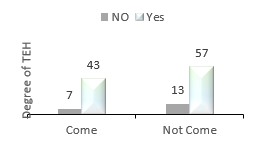
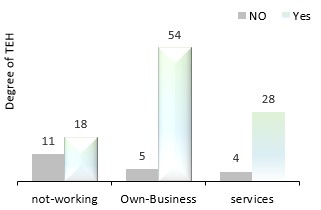
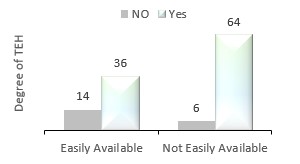
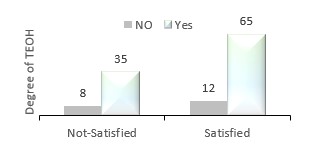
The study analysis focuses on descriptive analysis for showing the inter-relationship and econometric analysis. It is analyzed with the help of both the dependent and independent variables. Table-3 below explains the frequency and percentages of tourists’ expectation occurrence according to different characteristics in those tourists whose response is that Hazara motorway under CPEC project has impact on tourism growth.
Moreover, the econometric model is estimated the effect of various influencing factors on the tourist expectation for tourism growth due to the Hazara motorway under China-Pakistan Economic Corridor has been presented in Table-3.
Descriptive Statistics
Table 3. Estimation of tourists’ expectation regarding tourism growth due to Hazara motorway under CPEC by the percentage of each variable.
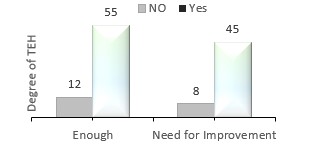
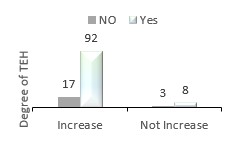
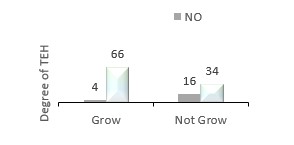
| Tourist expectation on tourism growth under CPEC due to Hazara Motorway (TEH) width="172">Frequency of TEH in tourists who responded (Yes) width="179">Percentage TEH in Tourists (%) | > Gender of the Respondent | > Female width="172">48 width="179">40 | > Male width="172">52 width="179">43.33 | > Occupation of Respondent | > Not Working width="172">18 width="179">15 | > Own Business width="172">54 width="179">45 | > Services width="172">28 width="179">23.33 | > Marital Status of Respondent | > Married width="172">5 width="179">4.16 | > Unmarried width="172">95 width="179">79.17 | > Education of Respondent | > Educated width="172">76 width="179">63.33 | > Illiterate width="172">24 width="179">20 | > The efficiency of Hotel/ Satisfaction on Hospitality and Tourism Infrastructure | > Not Satisfied width="172">35 width="179">29.17 | > Satisfied width="172">65 width="179">54.16 | > Availability of Room | > Easily Available width="172">36 width="179">30 | > Not Easily Available width="172">64 width="179">53.33 | > Tourism and hospitality Infrastructure is Enough to Meet the Demand of Tourists | > Enough width="172">55 width="179">45.83 | > Need Improvement width="172">45 width="179">37.50 | > Tourists will come due to Hazara CPEC Motorway | > Tourist Not come width="172">57 width="179">47.50 | > Tourist Come width="172">43 width="179">35.83 | > Increase of Tourism under CPEC | > Not increase width="172">8 width="179">6.67 | > Increase width="172">92 width="179">76.67 | > Tourism Growth | > Grow width="172">66 width="179">55 | > Not Grow width="172">34 width="179">28.33 | |||||||||||||||||||||||||||||||||||||||||||||||||||||||||||
| List of Variable width="86" valign="top">Coefficients width="111" colspan="2" valign="top">Standard Error width="86" valign="top">Z- value width="132" valign="top">P-value | > Gender of Respondent (GOR) | > Male width="86">.0886043 width="111" colspan="2">.8560815 width="86">0.10 width="132">0.918 | > Marital Status of Respondent (MS) | > Married width="86">3.192968 width="111" colspan="2">2.262525 width="86">1.41 width="132">0.158 | > Occupation of Respondent (OCCUPOR) | > Own Business width="86">5.234786 width="111" colspan="2">1.478141 width="86">3.54 width="132">0.000*** | > Services width="86">3.614106 width="111" colspan="2">1.228157 width="86">2.94 width="132">0.003*** | > Education of Respondent (EDUOR) | > Educated width="86">.9982637 width="111" colspan="2">1.012299 width="86">0.99 width="132">0.324 | > Availability of Rooms (AOR) | > Easily available width="86">4.905531 width="111" colspan="2">1.417136 width="86">3.46 width="132">0.001*** | > Tourists will come due to Hazara CPEC motorway (TCDTH) | > Tourist come width="86">4.00462 width="111" colspan="2">1.324799 width="86">3.02 width="132">0.003*** | > Tourism Increased under CPEC (ITUCPEC) | > Increase width="86">2.90668 width="111" colspan="2">1.266644 width="86">2.29 width="132">0.022** | > Tourism Growth (THG) | > Grow width="86">2.12504 width="111" colspan="2">.9610256 width="86">2.21 width="132">0.027** | > Tourism and Hospitality infrastructure is enough to meet the tourists demand (HSEFD) | > Need improvement width="86">1.867002 width="111" colspan="2">.975147 width="86">1.91 width="132">0.056* | > Satisfaction on hospitality and tourism infrastructure (EOH) | > Not satisfied width="86">-2.003874 width="111" colspan="2">1.114164 width="86">-1.80 width="132">0.072* | > No. of observations= 120 width="280" colspan="3">Prob>Chi2= 0.0000 | > Likelihood ratio test ?2 (11) = 57.01 width="280" colspan="3">Pseudo R2= 0.5272 | > Level of Significance: ***p < 0.01, **p < 0.05, *p < 0.1 | > Category of Reference: GOR: Female, MS: Unmarried, OCCUPOR: Not working, EDUOR: Illiterate, AOR: Not Easily Available, TCDTH: Tourist not come, ITUCPEC: Not increase, THG: Not grow, HSEFD: Enough, EOH: Satisfied | height="0"> width="86"> width="50"> width="61"> width="86"> width="132"> | ||||||||||||||||||||||||||||||||||||||||||||||||||||||||||||||||
Source: Authors’ estimation.
Availability of Rooms
The result demonstrates that the availability of rooms has an important and progressive effect on the tourists' expectation of tourism growth under CPEC due to the Hazara motorway. The results are consistent with (Chu & Choi, 2000), which says that the availability of rooms has a developmental and positive effect on tourism and hoteling growth. The result shows that Not-easily available of rooms category is positively related to the tourists' expectation of tourism growth under CPEC as compared to the easily available category. The tourism growth of a specific area is based on facilities available in that area, more specifically in terms of residence or room availability. Availability of rooms is the main factor that can affect tourism potential. A study depicts that a number of hotel rooms can largely increase tourism competitiveness levels in southeast European countries (Jovanovi? & Ivana, 2016). The results of a study indicate that financial resources of tourists, market price levels, and room availability have a significant and better impact on tourism related budget, expenditures, and investment (Muryani et al., 2021). A study by Heng and Low (n.d.) highlighted that tourism growth in Singapore is constrained by hotel rooms and other facilities.
Occupation of Respondent
The kind of occupation and source of income of a tourist has an influential and significant effect on the expectations of tourist and tourism growth under CPEC due to Hazara motorway, both categories of tourists' occupation are significant as compared to the not-working category, which shows that as tourists' occupation in terms of income increase this will increases the chances to make visits and in results tourism will increase. So, occupation of the tourist is the main factor for tourism growth because having occupation means having an income, and it means people will also make some visits. Significant differences were noted in tourism perceptions based on household income, ethnicity, and occupation in Australia (Sharma & Dyer, 2009).
Tourist will come due to Hazara CPEC Motorway.
The result indicates that tourists will come due to Hazara motorway have an influential and developmental effect on the tourists' expectation and tourism growth under CPEC the Hazara motorway. The results are consistent with (Ferri, 2004), that highway has a positive impact on hoteling and tourism industry growth. The result of a study Joglosemar, Indonesia depicts that tourist services and infrastructure influence the tourists to visit this region (Ineke & Winda, 2018). The infrastructure of the tourism industry is a significant contributor in increasing tourism in 28 countries (Khadaroo & Seetanah, 2008). With the start of the CPEC project in this region, the Hazara highway was the part of this project which is almost completed. Roads are the main factor to access development in any area. So, it is expected that due to this, road tourism in Pakistan will grow in the future.
Tourism Increased under CPEC
The result illustrates that tourism increased under CPEC have an influential and developmental effect on the tourists' expectation and tourism growth under CPEC due to Hazara motorway. The results are similar to the (Ferri, 2004), which observed a growing effect of the corridor on the increase of tourism. The development of a study Joglosemar, Indonesia depicts that tourist services and infrastructure influence the tourists to visit this region (Ineke & Winda, 2018). Infrastructure of the tourism industry is a significant contributor in increasing tourism in 28 countries (Khadaroo & Seetanah, 2008). The government has given much importance to tourism, and they are taking many steps to encourage tourism in this region through construction of roads and providing infrastructure. Due to these steps, tourism has already increased according to TCKP. So, in the light of results tourism will grow in this region under CPEC due to Hazara motorway in future.
Tourism Growth under CPEC
Roads, hotels, restaurants, and entertaining services are the main infrastructure which boost tourism in any region. The result demonstrates that in future there will be a high chance of tourism and hoteling industry growth in Pakistan, results also indicates that there is a positive and significant impact of tourism industry growth in this region due Hazara motorway under China-Pakistan Economic Corridor. The results are matching with (Ferri, 2004) which shows that the corridor has a positive impact on Tourism and Hoteling growth. Infrastructure of the tourism industry is a significant contributor in increasing tourism in 28 countries (Khadaroo & Seetanah, 2008). A study by Jovanovi? and Ivana (2016) depicts that investment on to modernize infrastructure can prove a significant factor of tourism development in southeast European countries.
Tourism and Hospitality Infrastructure is Enough to Meet the Tourists’ Demand
The result shows that tourism infrastructure is enough to meet tourist demand is positively and significantly related with tourists’ expectation of tourism growth under CPEC due to Hazara motorway. The results are consistent with (Jovanovic & Ivana, 2016) that hospitality infrastructure has a positive impact on tourism growth. Khadaroo & Seetanah (2008) reported that tourism infrastructure is an important factor to increase tourism in 28 countries. A study by Jovanovi? and Ivana (2016) depicts that investment on to modernize infrastructure can prove a significant factor of tourism development in southeast European countries. The result shows that the Need for Improvement category is positively related with the tourists’ expectation of tourism growth as compared to Enough-category.
Satisfaction on Hospitality and Tourism Infrastructure
The result shows that the tourists’ satisfaction on hospitality and tourism infrastructure is negatively and significantly related to the tourists’ expectation of tourism growth under CPEC due to Hazara motorway. The result shows that not-satisfied category of satisfaction on hospitality and tourism infrastructure is negatively related with the tourists’ expectation of tourism growth as compared to the satisfied category. The results are consistent with (Ghasemi and Gholamalizadeh, 2015). Result of a study Joglosemar, Indonesia depicts that tourist services and infrastructure influence the tourists to visit this region (Ineke & Winda, 2018). A study by Jovanovi? and Ivana (2016) depicts that investment
on to modernize infrastructure can prove a significant factor of tourism development in southeast European countries.
Conclusion
The results of the study conclude that some factors such as occupation of respondent, availability of rooms, tourist will come due to Hazara CPEC motorway, tourism will increase under CPEC, tourism will grow under CPEC, and tourism and hospitality infrastructure is enough to meet the tourist demand are contributing in the tourism growth under the CPEC due to Hazara motorway in Hazara region. Descriptive results highlighted that most of tourists needs improvement in hospitality and tourism infrastructure because due to the ignorance on infrastructure, the rooms are not easily available in the tourist destination places. Northern areas of Pakistan are having some of the highest peaks of the world, lacks, civilizations, mountains, hacking tracks, and historic forts with untapped tourism beauty. However, owing to a lack of government attention, poor tourism promotion, and no prior development in the tourist industry, Pakistan is facing a decrease in the tourism industry as compared to other nations across the world. In the start of 2018, the successive government investing on priority basis in tourism infrastructure. CPEC has contributed in providing significant and potential growth paths by regional contribution through roads like Hazara motorway, trade and tourism industry will increase for both China and Pakistan. Most of the tourists were happy with the construction of Hazara motorway, according to them, travel to tourist destination is become more accessible now. Hazara motorway contributes to trade and progress of rural regions of Pakistan and China, but most of the tourists were hoped that CPEC motorways would also reflects tourism directly or indirectly in the future. So, there is a need to enhance the hospitality and tourism infrastructure and tourism boosting campaigns with road maps through media or government authorities.
References
Cite this article
-
APA : Saheed, R., Ahmad, N., & Khan, A. (2021). Evaluating the Impact of Hazara Motorway on Tourism Growth Under the China-Pakis... Global Political Review, VI(II), 55-66. https://doi.org/10.31703/gpr.2021(VI-II).07
-
CHICAGO : Saheed, Rafit, Nauman Ahmad, and Armaghan Khan. 2021. "Evaluating the Impact of Hazara Motorway on Tourism Growth Under the China-Pakis..." Global Political Review, VI (II): 55-66 doi: 10.31703/gpr.2021(VI-II).07
-
HARVARD : SAHEED, R., AHMAD, N. & KHAN, A. 2021. Evaluating the Impact of Hazara Motorway on Tourism Growth Under the China-Pakis... Global Political Review, VI, 55-66.
-
MHRA : Saheed, Rafit, Nauman Ahmad, and Armaghan Khan. 2021. "Evaluating the Impact of Hazara Motorway on Tourism Growth Under the China-Pakis..." Global Political Review, VI: 55-66
-
MLA : Saheed, Rafit, Nauman Ahmad, and Armaghan Khan. "Evaluating the Impact of Hazara Motorway on Tourism Growth Under the China-Pakis..." Global Political Review, VI.II (2021): 55-66 Print.
-
OXFORD : Saheed, Rafit, Ahmad, Nauman, and Khan, Armaghan (2021), "Evaluating the Impact of Hazara Motorway on Tourism Growth Under the China-Pakis..", Global Political Review, VI (II), 55-66
-
TURABIAN : Saheed, Rafit, Nauman Ahmad, and Armaghan Khan. "Evaluating the Impact of Hazara Motorway on Tourism Growth Under the China-Pakis..." Global Political Review VI, no. II (2021): 55-66. https://doi.org/10.31703/gpr.2021(VI-II).07