
- Ahmed, I. (2010). Retrieved on 23/2/2010 from
- Galtung, J. (1998). Peace Journalism: What, Why, Who, How, When, where, paper presented at the workshop. What are Journalists for? TRANSCEND, Taplow Court, 3-6 September.
- Galtung, J., & Vincent, R. (1993). Global Glasnost - Toward a new world information and communication order? Cresskill, NJ: Hampton Press
- Lee, S. T., & Maslog, C. C. (2005). War or peace journalism? Asian newspaper coverage of conflicts. Journal of communication, 55(2), 311-329.
- Javaid, U. (2013). Security concerns in South Asia, Lahore, University of the Punjab.
- Javaid, U. (2006). Peace and Security in South Asia: Issues and Challenges. Lahore, Pakistan Study Centre, University of the Punjab.
- Koven, R. (2004). An Antidote to Hate Speech: Journalism, Pure and Simple. Source:
- Labott, E. (2009). Report: Terror attacks up in Pakistan, Afghanistan retrieved on 3/2/2010 from
- Mazhar, M. S., & Goraya, N. (2014). Post-2014 Afghanistan: Reflections & Off-Shoots. Lahore: University of the Punjab, Lahore.
- Noor, S. (2007). Pakistan-India relations and terrorism. Pakistan Horizon, 60(2), 65-84.
- Mohindra, S. (1993). Terrorist Games Nations Play (New Delhi: Lancer Publishers, 1993), p. 16
- Norris, P., Kern, M., & Just, M. (2003). Framing terrorism. Framing terrorism: The news media, the government, and the public, 3-23.
- NYTC (2017).
- Oppen, Karoline von (2009) Reporting from Bosnia: Reconceptualising the Notion of a ‘Journalism of Attachment. Journal of Contemporary European Studies, 17:1, 21-33, DOI: 10.1080/14782800902844669
- Puddephatt, A. (2006). Voices of war: Conflict and the role of the media. Report of International Media Support (IMS 2006). Available at:
- Polgreen, L. (2009). retrieved on 3/1/2010 from
- Raman (2003) retrieved on 12/12/2009 from
- Rizvi, G. (1994). India Pakistan and Kashmir problem 1947-71 (ed.) Perspectives on Kashmir by Dr. Kaniz Fatima Yousaf, Islamabad: Pakistan Forum
- Thompson & Price. (2003). Intervention, Media and Human Rights Mark, International Institute for Strategic Studies.
- Wade, M. (2010). retrieved on 26/2/2010 from
Abstrict
This study is a content analysis of Op-rd from US, Chinese, Indian and Pakistani press. It is based on the war journalism frame and peace journalism frame devised by John Galtung. Convenient sampling method was used and each paragraph was taken as a unit of analysis. Statistical analysis was done using SPSS 20.0. The study checked the overall inclination of a country’s press with the perspective of war and peace journalism. The study analyzed the data from three year and found the significant results. It was observed that press of almost all countries are doing war journalism in sizeable measure. The global press has given stories with a war journalism frame in more quantity than the peace journalism. The study found that global press has given notable importance to the issue of terrorism between India and Pakistan. The statistical analysis and Chi-Square test of the data also gave significant results.
Keywords
War Journalism, Peace Journalism, Terrorism, India, Pakistan, Indo-Pak Conflict
Introduction
Noor (2007) maintains that relationship between India and Pakistan is in worst condition due to the territorial disputes. The continuing dispute and rivalry has given birth to so many other contentions and cross border terrorism is one of them. Incidents in the recent past has germinated terrorism as a separate and bilateral issue between India and Pakistan. Mohindra (1993) establishes that India considers Pakistan as responsible for internal instability, uprising and spreading dissatisfaction among the ranks of India.
Polgreen (2009) found that terrorism has become an important issue between India and Pakistan. It is the issue of terrorism that is halting peace process between both countries and is viewed as biggest enemy for both countries. In 2009, Pakistani Prime Minister Syed Yousaf Raza Gillani and Indian Premier Manmohan Singh took an important step in resolving this dispute. India agreed to deal with all issues independently and not to link border issue with terrorism.
Wade (2010) noted that India has refused to restart the peace process initiated by Pakistan. According to Pakistani officials, 5366 citizens have been killed while 13000 have been seriously injured in terrorist attacks in Pakistan. Pakistan also had evidence to prove India’s involvement in terrorist activities in Pakistan.
Ahmad (2010) noticed that Indian government claims to have confirmed news of Pakistan’s involvement in Mumbai attack. They claim that Pakistan has planned to threaten Indians by supporting terrorist to enter Indian Territory. This dispute is believed to be flaring up other issues between India and Pakistan that is, Kashmir issue. On the other hand, Pakistanis believe that India is putting up efforts to internally de-stabilize Pakistan. It is evident from India’s involvement in Baluchistan province for the purpose of fanning separatist voices. India’s involvement in Afghanistan is perceived as a tactic of Indian officials to manipulate Afghan government to get strategic depth against Pakistan. Pakistan’s Interior Minister Rehman Malik claimed to have proof of India’s involvement in terrorist attacks in Pakistan and India’s abetting in separatist movements in Baluchistan.
Labott (2009) noticed a decline in terrorist attacks around the globe as per the report of State Department. But in Pakistan, terrorist attacks have increased in the same period. It was reported that along with the number of attacks being increased, there occurred frequency of attacks and a high level of coordination among terrorists.
Raman (2003) analyzed that the terrorist threats India is facing since independence are different from latest methods of inflicting harm. The major attacks Indian people faced were from Hindu sectarian group against government. India faced terrorism in bordering states like Kashmir and Punjab while its inner states like Andhra Pradesh and Madhya Pradesh and Oddisa were also not free from such threats.
In last decade, there have been a number of terrorist activities in both countries:
| Terrorist incidents in Pakistan width="62" rowspan="20">width="216" colspan="4"> Terrorist incidents in India | > Year width="117">Number of incidents width="41">Deaths width="43">Injuries width="29">Year width="105">Number ofincidents width="41">Deaths width="41">Injuries | > 2017 width="117">190 width="41">1260 width="43">1,021 width="29">2017 width="105">1000 width="41">470 width="41">702 | > 2016 width="117">23 width="41">1,086 width="43">1,337 width="29">2016 width="105">1025 width="41">467 width="41">788 | > 2015 width="117">22 width="41">1,606 width="43">1,847 width="29">2015 width="105">884 width="41">387 width="41">649 | > 2014 width="117">17 width="41">2,412 width="43">3,395 width="29">2014 width="105">860 width="41">490 width="41">776 | > 2013 width="117">13 width="41">2,874 width="43">5,768 width="29">2013 width="105">694 width="41">467 width="41">771 | > 2012 width="117">32 width="41">2,783 width="43">4,264 width="29">2012 width="105">611 width="41">264 width="41">651 | > 2011 width="117">64 width="41">1,655 width="43">2,638 width="29">2011 width="105">645 width="41">49 width="41">730 | > 2010 width="117">144 width="41">1,695 width="43">2,961 width="29">2010 width="105">663 width="41">812 width="41">660 | > 2009 width="117">101 width="41">1,487 width="43">3,541 width="29">2009 width="105">672 width="41">774 width="41">854 | > 2008 width="117">67 width="41">1,184 width="43">1,876 width="29">2008 width="105">534 width="41">824 width="41">1,759 | > 2007 width="117">51 width="41">1,406 width="43">2,343 width="29">2007 width="105">149 width="41">626 width="41">1,187 | > 2006 width="117">16 width="41">314 width="43">669 width="29">2006 width="105">167 width="41">722 width="41">2,138 | > 2005 width="117">11 width="41">150 width="43">296 width="29">2005 width="105">146 width="41">466 width="41">1,216 | > 2004 width="117">19 width="41">304 width="43">671 width="29">2004 width="105">108 width="41">334 width="41">949 | > 2003 width="117">8 width="41">119 width="43">181 width="29">2003 width="105">196 width="41">472 width="41">1,183 | > 2002 width="117">14 width="41">105 width="43">331 width="29">2002 width="105">184 width="41">599 width="41">1,186 | > 2001 width="117">5 width="41">109 width="43">265 width="29">2001 width="105">234 width="41">660 width="41">1,144 | > Total width="117">1059 width="41">21144 width="43">34224 width="29">Total width="105">9754 width="41">9893 width="41">19027 | ||||||
| Terrorism * Country Data 2016 Crosstabulation width="42" rowspan="4">Percent | > Count | > width="300" colspan="4"> Country width="78" rowspan="2">Total | > Pakistani Press width="66">Indian Press width="48">US Press width="72">Chinese Press | > Terrorism width="60">War width="114">71 width="66">50 width="48">32 width="72">6 width="78">159 width="42">69.7% | > Peace width="114">26 width="66">6 width="48">10 width="72">2 width="78">44 width="42">19.3% | > Neutral width="114">12 width="66">2 width="48">10 width="72">1 width="78">25 width="42">11.0% | > Total width="114">109 width="66">58 width="48">52 width="72">9 width="78">228 width="42">
| > Percent (Coverage) width="114">47.8 width="66">25.4 width="48">22.8 width="72">3.9 width="78">width="42">
| |||||||||||||||
| Chi-Square Tests | > width="67"> Value width="67">df width="127">Asymp. Sig. (2-sided) | > Pearson Chi-Square width="67">21.795a width="67">14 width="127">.083 | > Likelihood Ratio width="67">26.185 width="67">14 width="127">.025 | > Linear-by-Linear Association width="67">.655 width="67">1 width="127">.418 | > N of Valid Cases width="67">228 width="67">width="127">
| > a. 14 cells (58.3%) have expected count less than 5. The minimum expected count is .44. | ||||||
The statistical test of Pearson’s Chi-square was conducted by employing cross tabulation technique in SPSS. The results revealed that the difference of coverage on water issue by subject countries is statistically significant (x2=12.950, p=.044).
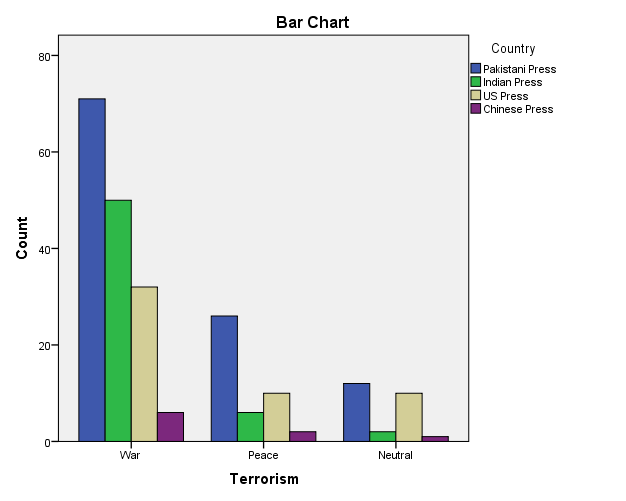
Figure: 1 Frequency Analysis of Showing the Coverage of Terrorism in 2016
In addition to this, frequency analysis revealed that numerically and statistically Pakistani press and Indian press have given significant importance to this issue (see chart 2). Pakistani press has given 109 (47.8%) stories and Indian press has given 58(25.4%) stories on this issue. Importantly US press has given a significant importance to the issue of terrorism between India and Pakistan, giving 52(22.8%) stories. The numerical analysis also uncovered that the issue of terrorism between India and Pakistan is not given epochal coverage by China, covering only 9(3.9%) stories.
2015
Content Analysis of 2015 data gave some important results. While studying the issue of Terrorism, it was found that total of 290 stories were given on cross border terrorism by the global media.
Table 4. Cross Tabulation Between Countries for Terrorism Conflict in 2015
| Terrorism * Country Data 2015 Crosstabulation width="59" valign="top">
| > Count width="59" valign="bottom">
| > width="316" colspan="4"> Country width="56" rowspan="2">Total width="59" rowspan="2">Percent | > Pakistani Press width="79">Indian Press width="64">US Press width="86">Chinese Press | > Terrorism width="65">War width="86">45 width="79">81 width="64">20 width="86">20 width="56">166 width="59">57.2% | > Peace width="86">31 width="79">5 width="64">9 width="86">11 width="56">56 width="59">19.3% | > Neutral width="86">32 width="79">7 width="64">10 width="86">19 width="56">68 width="59">23.4% | > Total width="86">108 width="79">93 width="64">39 width="86">50 width="56">290 width="59">
| > Percent (Coverage) width="86">37.2 width="79">32.1 width="64">13.4 width="86">17.2 width="56">width="59">
| |||||||||||||||
Among total, the coverage of 166 (57.2%) was tilted towards War Journalism, whereas 56 (19.3%) stories on the issue of Terrorism were reported in peace journalism style (see table 4.7). While only 68 (23.4%) stories on the issues of Terrorism were categorized as neutral frames.
Table 5. Pearson Chi-Square Test of Terrorism Issue in 2015
| Chi-Square Tests | > width="67"> Value width="67">df width="139">Asymp. Sig. (2-sided) | > Pearson Chi-Square width="67">53.065a width="67">6 width="139">.000 | > Likelihood Ratio width="67">57.749 width="67">6 width="139">.000 | > Linear-by-Linear Association width="67">.551 width="67">1 width="139">.458 | > N of Valid Cases width="67">290 width="67">width="139">
| > a. 0 cells (.0%) have expected count less than 5. The minimum expected count is 7.53. | ||||||
The statistical test of Pearson’s Chi-square was conducted by applying a cross tabulation technique using SPSS software. The results disclosed that the difference of coverage on the issue of terrorism by global press is statistically significant (x2=53.065, p=.000).
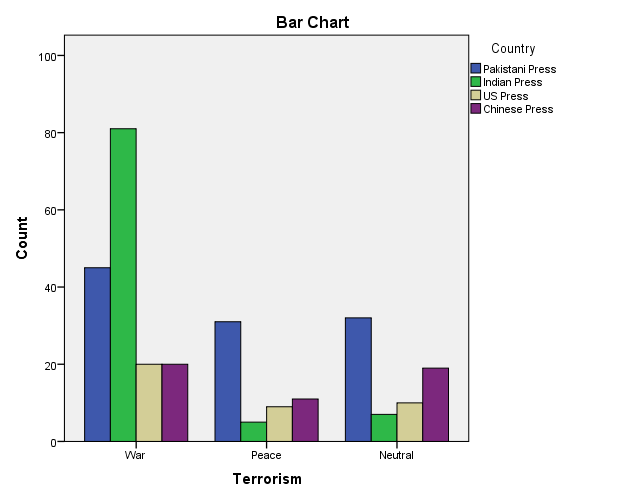
Figure 2: Cross tabulation Between Countries for Terrorism Conflict in 2015
In addition to this, frequency analysis discovered that numerically Pakistani press has given more stories 108(37.2%) than Indian press 93(32.1%) (see chart 6). unexpectedly, in 2015 Chinese press dealt issue of terrorism between India and Pakistan with more focus, publishing 50(17.2%) stories. Interestingly, US press has taken the bilateral issue of terrorism more seriously and given 39 (13.4%) stories.
2014
Content Analysis of data from 2015 op-ed gave some important results. While studying the issue of Terrorism, it was found that total of stories were given on cross border terrorism by the global media.
Table 6. Cross Tabulation Between Countries for Terrorism Conflict in 2014
| Terrorism * Country Data 2014 Crosstabulation | > Count | > width="312" colspan="4"> Country width="72" rowspan="2">Total width="42" rowspan="2">Percent | > Pakistani Press width="78">Indian Press width="66">US Press width="78">Chinese Press | > Terrorism width="44">War width="90">53 width="78">57 width="66">13 width="78">3 width="72">126 width="42">53.8 | > Peace width="90">25 width="78">6 width="66">8 width="78">6 width="72">45 width="42">19.2 | > Neutral width="90">20 width="78">15 width="66">18 width="78">10 width="72">63 width="42">26.9 | > Total width="90">98 width="78">78 width="66">39 width="78">19 width="72">234 width="42">
| > Percent (Coverage) width="90">41.9 width="78">33.3 width="66">16.7 width="78">8.1 width="72">width="42">
| |||||||||||||||||
| Chi-Square Tests | > width="96"> Value width="78">df width="108">Asymp. Sig. (2-sided) | > Pearson Chi-Square width="96">50.478a width="78">14 width="108">.000 | > Likelihood Ratio width="96">56.634 width="78">14 width="108">.000 | > Linear-by-Linear Association width="96">18.129 width="78">1 width="108">.000 | > N of Valid Cases width="96">234 width="78">width="108">
| > a. 8 cells (33.3%) have expected count less than 5. The minimum expected count is 1.35. | ||||||
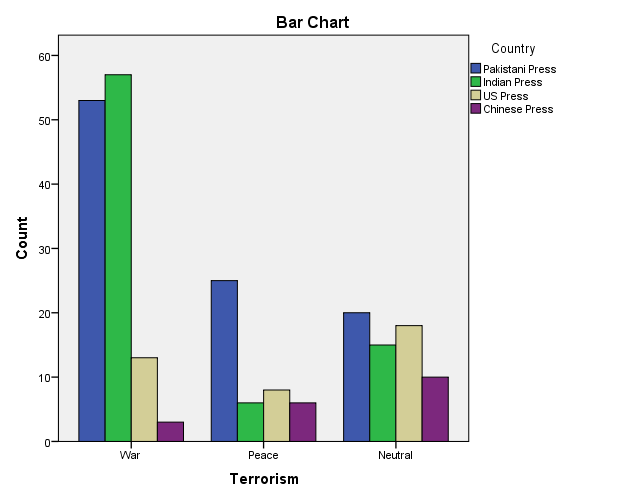
Figure 3: Cross tabulation Between Countries for Terrorism Conflict in 2015
Unlike the statistical analysis, frequency analysis was significant and revealed that numerically Pakistani press has given more stories 98(41.9%) than Indian press 78(33.3%) on the issue of Terrorism. In 2014 Chinese press again dealt issue of Terrorism between India and Pakistan without a significant focus, publishing 19(8.1%) stories (see table 4). On the other hand, US press has taken the issue of Terrorism with some considerable focus and given 39(16.7%) stories.
Conclusion and Discussion
Research Question
RQ1: What importance, in terms of number of stories, is given to terrorism issues by global press?
The analysis found that issue of terrorism was given a significant importance in terms of number of Op-Ed on the issue. In 2014 total Indian and Pakistan gave a sizeable coverage to the issue because both the countries are directly affected by the terrorism. Pakistani press gave 315 (41.8%) Op-Ed stories on the issue and Indian press gave 229 (30.4%) stories on issue of terrorism. US press gave 130 (17.2%) stories on the Indo-Pak conflict of terrorism. On the other hand, Chinese press did not cover the issue with significant importance and gave only 78 (10.3%) stories on the conflict in three years.
Test of Hypothesis
H1: It is likely to be that Indian press is doing war journalism on terrorism issue.
On the issue of terrorism, Indian press has given 229 stories from Jan, 2014 to December, 2016. In the year 2014, Indian press has given 78 stories and from these stories 57 (73%) were having war journalism frame. From total of 93 stories of 2015 by Indian press, 81 (87%) stories were having war journalism frame. In 2016, from a total of 58 stories on terrorism, Indian press gave 50 (83.2%) stories using war journalism frame. From this coverage it is found that Indian press used war journalism frame in of 188 (82%) stories and this figure proves the H1 hypothesis.
H2: It is likely to be that US press is doing war journalism on terrorism issue.
US press has given total of 130 stories in three-year study period. In 2014, there were 39 stories in US about the terrorism and 13 (33.3%) were having war journalism frame. In 2015, US press gave 39 stories on the issue of terrorism and out of these stories, 20 (51%) were with war journalism frame. On the other hand, US press gave 52 stories on the issue of terrorism between India and Pakistan in 2016, and out of these stories, 32 (61.5%) stories were having war journalism frame. This result establishes that US press has used war journalism frame in 65 (50%) stories and peace journalism in 27 (20%) stories (See table 2,4 & 6). This result proves the H2 hypothesis.
H3: It is likely to be that Chinese press is doing Peace journalism on terrorism issue.
The press of china has not shown much interest in the coverage of issue of terrorism between India and Pakistan. There are only 78 stories in the Chinese press about the issue of terrorism between India and Pakistan. In 2014, there are 19 stories covering the issue of terrorism and 3 (15.7%) were having war journalism frame, 6 (31.5%) were with peace journalism frame. In 2015, there were total 50 stories and 20 (40%) with war journalism and 11 (22%) with peace journalism frame. Chinese press gave only 9 Op-Ed stories on issue of terrorism between India and Pakistan. Out of these, 6 (66.6%) stories were with war journalism frame and 2 (22.2%) with peace journalism frame. The result proves that there is a total of 29 (37.1%) stories with war journalism frame and 19 (24.3%) stories with peace journalism frame. The result shows that war journalism is in greater measure and it disproves the hypothesis. Hence H3 is a null hypothesis.
H4: It is likely to be that Pakistani press is doing Peace journalism on terrorism issue.
Pakistan is a nation that is party of the conflicts with India. Overall, there were 315 stories about the issue of terrorism with India in Pakistani press. In 2014 there were a total of 98 stories and out of these 53 (54%) stories were with war journalism frame and 25 (25.5%) stories with peace journalism frame. In 2015 there were a total of 108 stories about the issue of terrorism, out of there 45 (41.6%) were having war journalism frame and 31 (28.7%) stories with peace journalism frame. Pakistani press gave total of 109 stories about the conflict of terrorism between India and Pakistan in 2016. Out of this a total of 71 (65.1%) stories were with war journalism frame and 36 (23.8%) stories with peace journalism frame. This shows that Pakistani press has given 169 (53.6%) stories with war journalism frame and 92 (29.2%) stories with peace journalism frame. This result disproves the H4 hypothesis and it is a null hypothesis.
Discussion
The results of the study are important but not very surprising. The countries involved in the conflict were doing war journalism, obviously. As the criteria for testing the frame was taken from john Galtung’s model, so it can be assumed that any journalism without professional or social consideration, would fall into war journalism. As the model of John Galtung considers it a war when the reporter reports material loss, peace efforts of elites, win-lose construction we-they construction and so on. These few constructions are very abundant and “routine” for the conflict reporters. The peace journalism is an uncommon but practical criterion for the reporters to become part of the solution not the problem.
The issue of terrorism was given significant importance by the global press and a sizeable number of Op-Ed contents was given on the topic as found by Norris, Kern and Just (2003). This much coverage also gives the hint of agenda of global media. The media follows the agenda of their nation and seems to be following the journalistic norms with very casual attitude. The cross-border terrorism is a conflict that is affecting both countries, India and Pakistan. The figures were alarming that in the last twenty years, Pakistan has faced more than 34000 casualties, that include armed forces, children, women and foreigners. On the other hand, India has faced more than 19000 deaths reportedly.
Limitations
• This study is a content analysis, but a mix method could reveal more in-depth findings.
• News stories along with Op-Ed could also yield important results.
References
Cite this article
-
APA : Mahmood, T., Khalid, S., & Iftikhar, U. (2019). Coverage of Cross Border Terrorism by Op-Ed of Global Press: A War and Peace Journalism Perspective. Global Political Review, IV(I), 11-21. https://doi.org/10.31703/gpr.2019(IV-I).02
-
CHICAGO : Mahmood, Tahir, Sumera Khalid, and Urwah Iftikhar. 2019. "Coverage of Cross Border Terrorism by Op-Ed of Global Press: A War and Peace Journalism Perspective." Global Political Review, IV (I): 11-21 doi: 10.31703/gpr.2019(IV-I).02
-
HARVARD : MAHMOOD, T., KHALID, S. & IFTIKHAR, U. 2019. Coverage of Cross Border Terrorism by Op-Ed of Global Press: A War and Peace Journalism Perspective. Global Political Review, IV, 11-21.
-
MHRA : Mahmood, Tahir, Sumera Khalid, and Urwah Iftikhar. 2019. "Coverage of Cross Border Terrorism by Op-Ed of Global Press: A War and Peace Journalism Perspective." Global Political Review, IV: 11-21
-
MLA : Mahmood, Tahir, Sumera Khalid, and Urwah Iftikhar. "Coverage of Cross Border Terrorism by Op-Ed of Global Press: A War and Peace Journalism Perspective." Global Political Review, IV.I (2019): 11-21 Print.
-
OXFORD : Mahmood, Tahir, Khalid, Sumera, and Iftikhar, Urwah (2019), "Coverage of Cross Border Terrorism by Op-Ed of Global Press: A War and Peace Journalism Perspective", Global Political Review, IV (I), 11-21
-
TURABIAN : Mahmood, Tahir, Sumera Khalid, and Urwah Iftikhar. "Coverage of Cross Border Terrorism by Op-Ed of Global Press: A War and Peace Journalism Perspective." Global Political Review IV, no. I (2019): 11-21. https://doi.org/10.31703/gpr.2019(IV-I).02